Baoyin Hexi Professor
Faculty Team
Astrodynamics and control
START is led by 20+ Tsinghua University undergraduates — from science goals to orbit design, from spacecraft systems to public outreach. This is deep-space exploration with students genuinely standing at every mission station.
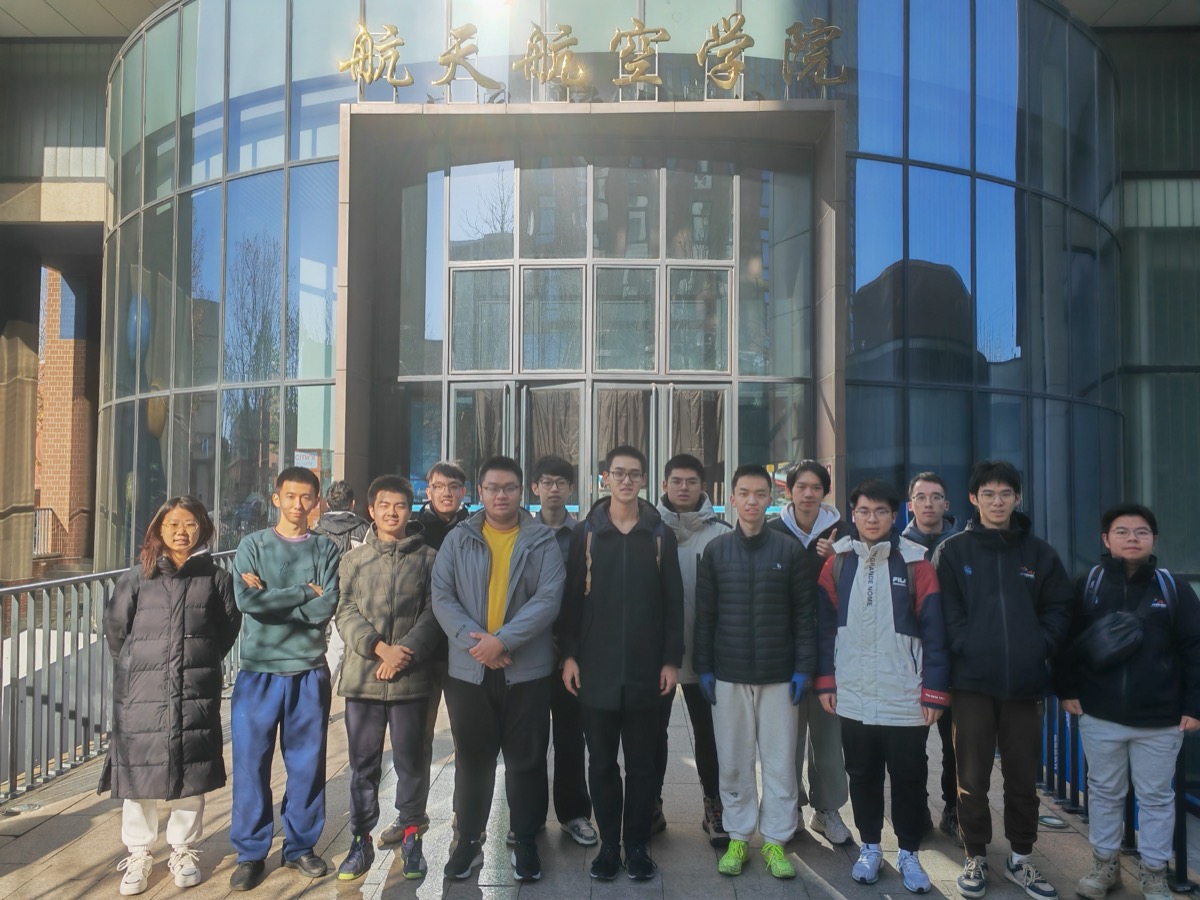
A faculty team in astrodynamics and control stands watch the whole way — student-led, expert-checked.
Faculty Team
Astrodynamics and control
Mission Chief Scientist · Faculty Adviser
Astrodynamics and Control Laboratory; contributed to China's Tianwen-2 asteroid mission
Faculty Team
Astrodynamics and control
Faculty Team
Spacecraft systems
Faculty Team
Spacecraft dynamics
* Faculty photos will be added upon personal authorization · roster as publicly stated
SCIENCE
Science goal definition · observation planning · data analysis strategy
MISSION DESIGN
Orbit design · electric-propulsion transfer strategy · flyby encounter geometry
SPACECRAFT
Spacecraft architecture · subsystem integration · payload selection
OUTREACH
Public communication · partnership liaison · member recruitment
2025-07 · Zhou Peiyuan National Mechanics Competition
128 teams from 53 universities competed head-to-head; ours cleared 125 targets with the highest metric score nationwide. The five members then set their sights on a farther target — an asteroid named Apophis.
A mission budget of about US$2.8 million comes from university support, donations, and sponsorships — with the launch rideshare, the electric propulsion system, and camera components all backed by commercial space partners. This is the low-cost commercial deep-space paradigm itself.
* Partner list as publicly announced · in no particular order
The mission was presented to international peers for the first time at the Apophis T-3 Years workshop in Padua, Italy; SpaceNews covered the mission design and progress in a dedicated article.
With system design complete, work has moved into subsystem integration, and prototype development is being prepared on schedule.
Preliminary designs completed for the probe and the pathfinder satellite; the first design review kicked off as all four task squads opened recruitment to the whole of Tsinghua.
A five-member core team topped 128 teams from 53 universities — clearing 125 targets with the highest metric score nationwide. Members: Wu Yixuan, Yu Yuhang, Huang Zhecheng, Yu Zhongyang (Xingjian College), Tang Zijie (School of Aerospace Engineering).
Selected for Tsinghua's Disruptive Innovation Talent Program with the highest support in the program's history; the team has since won an undergraduate National Natural Science Foundation of China grant, two national-level Innovation Training projects, and two Future Technology Challenge projects.
Science, orbits, spacecraft, outreach — the mission train is still taking on crew. Follow the WeChat official account "清华大学学生小行星探测任务" (Tsinghua Student Asteroid Mission) for recruitment updates.