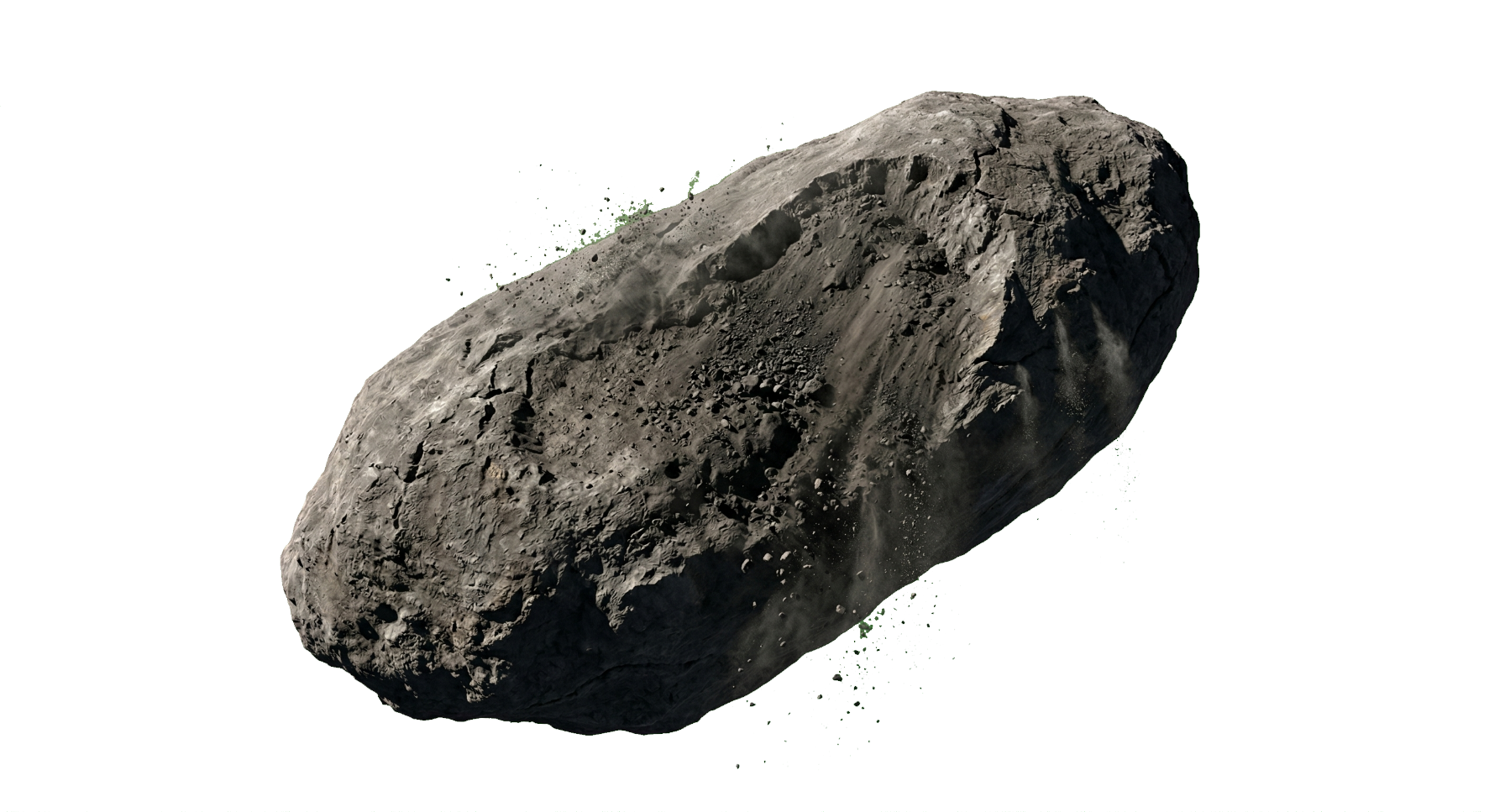
Rendering of asteroid Apophis (artistic interpretation)

99942 APOPHIS · T−··· DAYS

START

FLY TO APOPHIS

A near-Earth flyby roughly once every 7,500 years · a deep-space mission led by Tsinghua University undergraduates

LAUNCH WINDOWLate 2027 – Early 2028window TBD · planning baseline
APOPHIS ENCOUNTERT−···2029-04-13 21:46 UTC (Beijing 04-14 05:46)

Shape from a lightcurve-inversion model (3D Asteroid Catalogue) · neck and surface details are artistic · Sq-type stony · non-principal-axis tumbling

01THE GOD OF CHAOS

It Was Once Humanity's Nightmare

99942 Apophis — named after the Egyptian god of chaos and destruction. At its discovery in 2004, it carried the highest “hazard rating” of any object in recorded history. The story is told in three steps.

2004-12-27

1The Alarm Sounds

Just after Christmas, the numbers from NASA's Sentry system kept climbing: the impact probability briefly reached2.7% (1 in 37). The Torino hazard index was pushed to —

4on the scaleThe highest rating on record. No other object has reached it, before or since.

IF IT HITS

2If It Fell

A mean diameter of roughly 340–375 m — longer than three football fields laid end to end. Had it struck Earth, the energy released would have been about 100,000 times that of the Hiroshima bomb — fortunately, the impact risk was ruled out in 2021. This was not science fiction, but arithmetic the astronomers of the day had to face. On to the next step.

2021-03

3All Clear

In March 2021, joint radar observations by Goldstone and Green Bank narrowed the orbital uncertainty to the kilometer level. JPL and then ESA removed Apophis from their risk lists — safe for the next 100+ years.

The threat is over. But a scientific opportunity that comes roughly once every 7,500 years has only just begun.

Full risk history →

02THE ENCOUNTER

An Encounter That Grazes the Geostationary Belt

On April 13, 2029 at 21:46 UTC (05:46 Beijing time, April 14), Apophis sweeps past over the Atlantic, just 31,600 kilometers above Earth's surface — closer than geostationary satellites.

SIMULATION · TEAM FLYBY DYNAMICS ANIMATION

0km

Closest distance to Earth's surface · ~38,000 km from Earth's center

0km/s

Flyby speed · Apophis relative to Earth

2billion people

Visible to the naked eye · Europe / Africa / West Asia

0mag

Peak apparent magnitude · clearly visible under rural skies

i

Closest approach comes over the Atlantic; the visible zone covers the western half of the Eastern Hemisphere

ii

Ground-based networks within China fall in the blind zone

iii

So we send the telescope up

CHINA · GROUND-STATION BLIND ZONET−3hT+3hCLOSEST APPROACH · OVER THE NORTH ATLANTICBasemap Natural Earth (public domain) · Ground track from JPL ephemerides (4-min step) · Visible zone: Europe / Africa / West Asia
03THE MISSION

A “Doorstep” Deep-Space Mission

No years-long cruise into deep space — place the spacecraft in a 31,600-kilometer high orbit and lie in wait on Apophis's inevitable path. As mission chief scientist Bin Cheng puts it: "This is a 'doorstep' deep-space target."

04INNOVATIONS

Three Things No One Has Done Before

① HIGH-PRECISION GAZE

High-Precision Gaze Tracking

A two-axis gimbal locks onto a target streaking past at 8.74 km/s with ≤0.007° tracking accuracy (design value), holding motion blur below one pixel — like training a telephoto lens on a bird outside the window of a speeding bullet train, and keeping it sharp.

Gaze tracking accuracy (3σ)0.007°DESIGN ·Peak resolution8cm/px

See how sharp 8 cm/px really is →

② WIDE-RANGE ELECTRIC TRANSFER

Ultra-Wide-Range Orbital Maneuver

A 60 mN Hall-effect thruster — thrust equal to the weight of a sheet of A4 paper — drives the 200 kg spacecraft through 378 days, 3,048 orbits and 802 ignitions, climbing 30,000 kilometers up from low Earth orbit: the world's first all-electric transfer chain linking LEO to high orbit (true-trajectory design values). En route it crosses the Van Allen radiation belts again and again — auto-cutoff in eclipse, dose measured continuously orbit by orbit — surveying the danger zone into a 3D map along the way.

Hall thruster60mNDESIGN ·Delta-v4.11km/sDESIGN

DAY 000 · orbit 0

Inner belt (protons)Outer belt (electrons) · Repeated crossings · Auto-cutoff in eclipse · 3D radiation-belt survey →

Enter Act 2 · Three Thousand Orbits →

③ PRECISION FLYBY

Precision Insertion · High-Speed Flyby

Acquire the target from 2 million kilometers out (design value) and autonomously guide down to a 7-kilometer closest approach — at a relative speed of 8.74 km/s, the entire golden window lasts only about 2 hours. There is no second chance.

Closest encounter range7km ·Golden observation window2h

Rifle bullet≈1 km/s
ISS7.7 km/s
This flyby8.74 km/s

Relative speed · spacecraft relative to Apophis

Enter Act 4 · The Golden 2 Hours →
05TWO FIRSTS

The first student-led deep-space asteroid mission

Student-led = undergraduates carry out mission design · spacecraft development · flight operations — 20+ undergraduates × 6 schools & departments

China's first low-cost deep-space mission powered by commercial spaceflight

Commercially powered = commercial rideshare launch + commercial electric propulsion + socially raised funding — budget ≈ US$2.8M (university support + donations + sponsorships)

06RENDEZVOUS 2029

Four Ships, One Rendezvous — Each in Its Own Hour

DESTINY+ scouts ahead, RAMSES rides alongside the whole way, OSIRIS-APEX orbits afterward — and START is the only one standing watch at closest approach. Complementary in time and space — not a race.

20282028.72029.420302030.82029-04-14 · CLOSEST APPROACHDESTINY+JAXA · Japan · Advance flybyRAMSESESA + JAXA · Europe/Japan · Full escortSTART · TsinghuaTsinghua University · China · Precision closest-approach flybyOSIRIS-APEXNASA · United States · Post-flyby orbit

DESTINY+ JAXA · Japan

Advance flyby · Underway · 2028 shared launch with RAMSES

Flies past in early 2029, taking the first-ever close-range images of Apophis from space. Its primary mission is a 2030 flyby of Phaethon, parent body of the Geminid meteor shower — Apophis is a rehearsal en route.

RAMSES ESA + JAXA · Europe/Japan

Full escort · Underway · launching 2028-04 on H3

Arrives no later than 2029-03-01, on station before, during, and after the flyby. Fully approved at the November 2025 Ministerial Council, with a total investment of about €150 million.

START · Tsinghua Tsinghua University · China

Precision closest-approach flyby · In development · early-2028 commercial rideshare launch

On station at closest approach on 2029-04-14, capturing the golden 2 hours of tidal upheaval. The only mission staring from 7 km at closest approach — capturing the 2 hours when no one else is there.

OSIRIS-APEX NASA · United States

Post-flyby orbit · In flight · Earth gravity assist completed 2025-09

Slips in about 1 hour after the flyby, then 18 months of close-up study. Extended OSIRIS-REx mission; will fire its thrusters to blow away surface material and observe the subsurface. Mission continues, with funding decided year by year.

07TIMELINE

From project start to rendezvous

✓ done● active○ planned◍ adjusting

2025.04✓ done

Project kickoff · team formed

20+ Tsinghua undergraduates form four task squads — science, mission design, spacecraft systems, and outreach — selected for Tsinghua's Disruptive Innovation Talent Program.

2025.07✓ done

Zhou Peiyuan National Mechanics Competition · sole Grand Prize in Space Orbit Design

Five core members topped 128 teams from 53 universities — clearing 125 targets with the highest metric score nationwide.

2025.12✓ done

"Fly To Apophis!" open recruitment

Preliminary designs completed for the probe and the pathfinder satellite; first design review kicked off, with recruitment open across campus.

2026◍ adjusting

Pathfinder satellite · key technologies verified in orbit

The first pathfinder satellite carries out in-orbit tests and astronomical observations to validate key technologies.

2026.09● active

Prototype development begins

System design review completed; work moves into subsystem integration and prototype development.

2027.09○ planned

Spacecraft delivery

Full-spacecraft assembly, integration, and test campaign completed, followed by the pre-shipment review.

2027.10 – 2028.02○ planned

Launch window

Rides a commercial launch vehicle into a 1000 km / 55° low Earth orbit.

2028○ planned

Electric-propulsion spiral raise

About 245 days and 1,730 orbits — the world's first all-electric transfer chain from LEO all the way to 31,600 km.

2029.04.14○ planned

Apophis close flyby · the golden 2 hours

05:46 Beijing time (2029-04-13 21:46 UTC), a high-speed staring observation from 7 km.

T−··· DAYS

2029+○ planned

Extended mission

3-D radiation-belt survey · lunar-transfer validation · low-cost sampling technology demonstration.

Timeline reflects publicly stated plans · spaceflight schedules may shift · updated 2026-07

08THE CREW

Twenty-plus undergraduates, one appointment with an asteroid

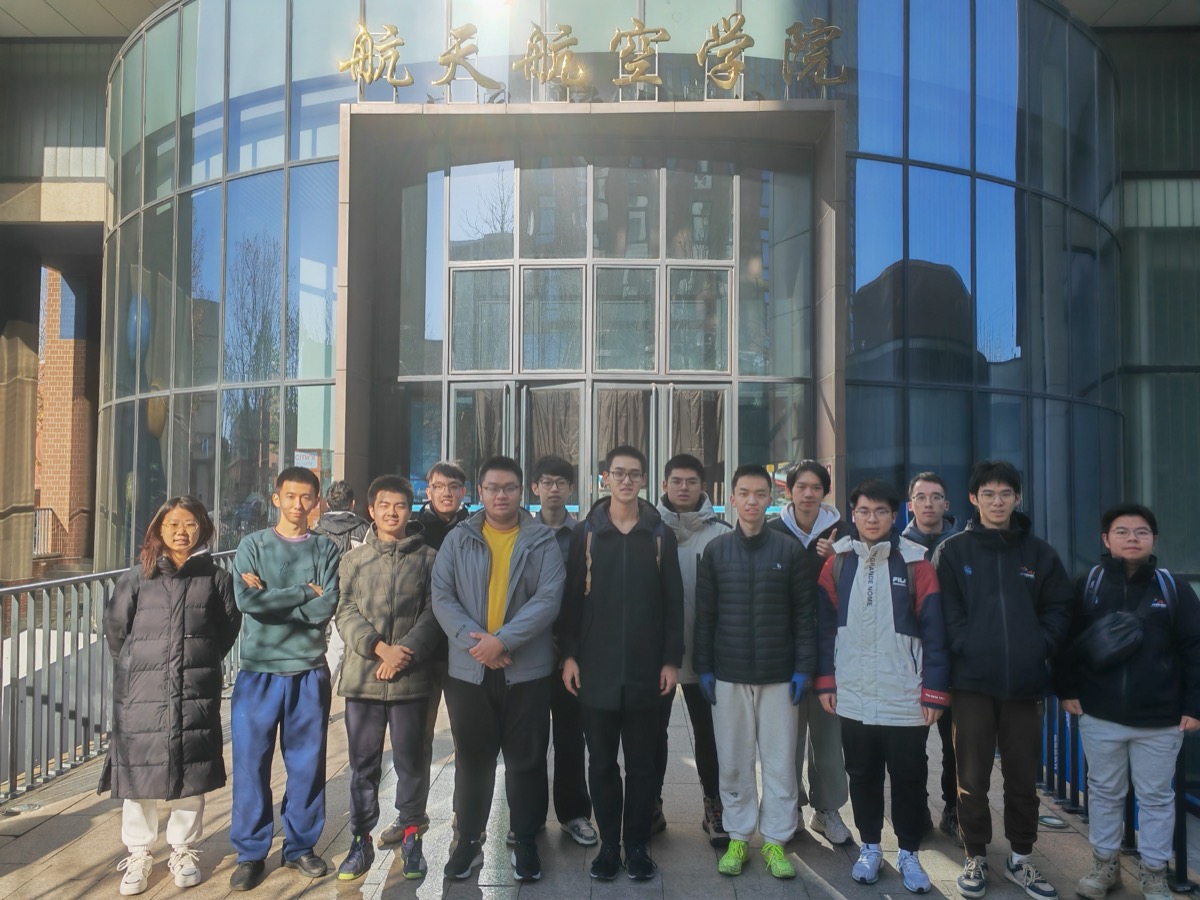
Group photo of the START student team
School of Aerospace Engineering, Tsinghua University · Mission Team

20+undergraduates

Students at every station of the mission

6schools & departments

Aerospace · Xingjian · Dushi · Astronomy · Zhili · Arts & Design

4task squads

Science · Mission Design · Spacecraft · Outreach

Faculty advisers: Li Junfeng · Baoyin Hexi · Wang Zhaokui · Wang Tianshu · Bin Cheng (Mission Chief Scientist)